
Signs & banners
Foam Board, Poster, or Coroplast Sign?
The right sign material depends on where the sign will live, how long it needs to last, and how polished it needs to look.
5 min read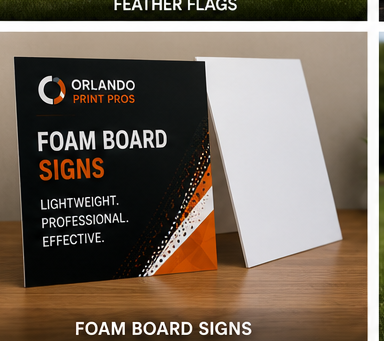
Choose foam board for protected indoor display
Foam board is useful for tabletop displays, presentations, lobby visuals, indoor event signs, and short-term display boards.
Choose posters for flat wall or frame use
Posters are a better fit when the piece will be taped, framed, mounted, or used as a lightweight visual instead of a rigid board.
Choose coroplast for temporary outdoor signs
Coroplast is lightweight and commonly used for yard signs, parking signs, directional signs, and outdoor campaign pieces.
Quote details to gather
The material decision becomes easier when the quote includes the real display environment.
- Indoor or outdoor use
- Finished size
- Quantity
- Display duration
- Mounting or hardware needs
- Viewing distance
- Deadline
Mistakes to avoid
A sign can be printed correctly and still be the wrong fit if the material does not match the environment.
- Using foam board outside
- Choosing a poster when a rigid display is needed
- Forgetting stakes or easels
- Designing small text for distant viewing
Turn this guide into a cleaner quote request
Use this guide as a planning step before asking for pricing. For foam board, poster, or coroplast sign?, the most helpful request explains the product, quantity, final size, material or paper preference, deadline, and whether the artwork is already print-ready.
If the project is tied to an Orlando event, local campaign, storefront deadline, or delivery window, include that context in the first message. Those details make it easier to understand whether the job is a standard print request, a rush request, or a project that needs artwork review before production.
The goal is not to overcomplicate the request. The goal is to remove the guesses that usually slow down print pricing: unclear sizes, missing quantities, unfinished files, unknown materials, and deadlines that were not mentioned until the end of the conversation.
If you are comparing options, send the preferred version and the fallback version. That makes it easier to price practical choices without restarting the conversation.
For Orlando projects, timing context is especially useful. A convention date, graduation ceremony, grand opening, mailing window, storefront event, or hotel delivery need can change which production path makes sense. Put that timing in the quote request even if the artwork or final quantity is still being finalized.
If the piece belongs to a larger campaign, mention the connected materials too. A flyer may need matching postcards, a banner may need matching table signs, and event credentials may need matching programs or handouts. Keeping related pieces together helps the final set feel consistent.
Include these details when you are ready
- The printed product or products you need quoted
- Finished size, quantity, material, color, and finish notes
- Deadline, event date, pickup needs, or delivery timing
- Artwork status, file format, and whether edits are needed
- Any related pieces that should match the same design system